
1. Define the concrete element
Confirm the slab, base, pad, path, patio, hardstanding or stated foundation element, plus retained edges and final level.
Core service
Breakout and removal of slabs, bases, patios, driveways, pads and foundations where access allows.
We plan the work around your site, access, waste removal and the finish needed for the next stage.
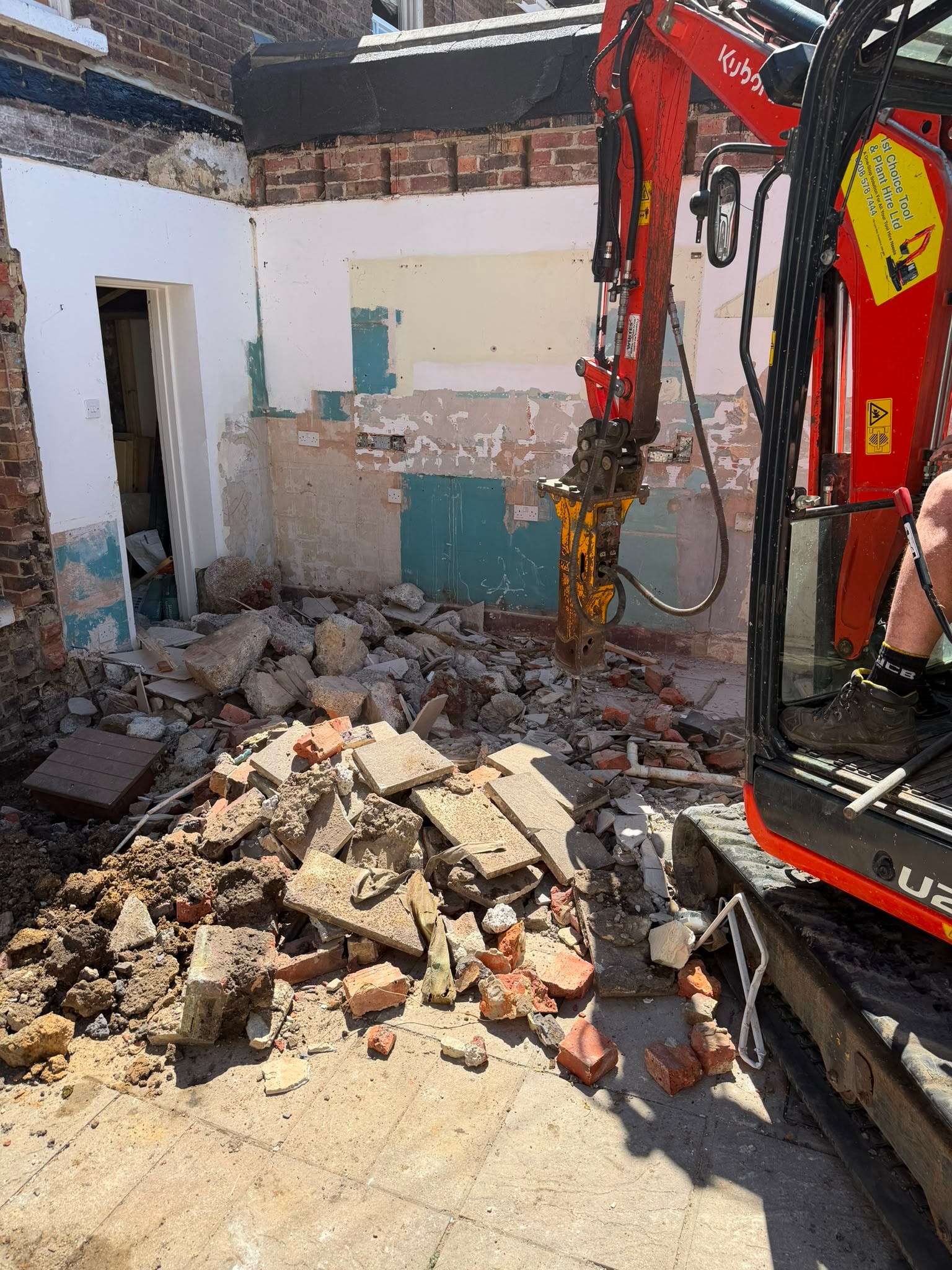
This service is suitable for homeowners, builders and developers. The scope is built around the project information, retained elements and the condition needed for the next stage.
Concrete removal covers controlled breakout and removal of agreed slabs, bases, pads, paths, patios and hardstanding. Foundations are included only where structurally suitable and specifically identified. The scope begins by establishing likely thickness, reinforcement, substrate condition, hidden services, drainage, retained edges and the required final depth or formation level.
Concrete removal differs from Floor and Screed Removal, which addresses finishes and screed layers above a retained structural substrate. It also differs from excavation and ground remediation. Slab removal and foundation removal are separate decisions, and concealed conditions mean an undamaged retained substrate cannot be promised.
Hand-held or mechanical breaking methods are selected around the concrete thickness, reinforcement, access, floor-loading constraints, retained edges and surrounding construction. Saw-cut boundaries can be included where required to define a clean separation from retained concrete.
Hidden services and drainage must be considered before breakout. Dust, respirable silica, noise and vibration controls are selected through the task assessment for the actual work and surroundings. Plant access, loading and debris routes are planned so concrete and reinforcement can be handled safely and efficiently.
Concrete and reinforcement are segregated where practical and removed through the agreed loading route. The scope identifies whether the work stops at a retained substrate, removes a slab to a stated depth, or includes a specified foundation element.
Breakout is not excavation or ground remediation. The handover may be a saw-cut edge, exposed substrate, reduced level or formation ready for the following contractor. Repairs, new drainage, new concrete and ground treatment are separate scopes unless expressly included.
Pulborough is the principal verified concrete-breakout example. Cobham is included only for verified garage slab or hardstanding work; Ascot is excluded because new foundation excavation is not concrete-removal evidence.
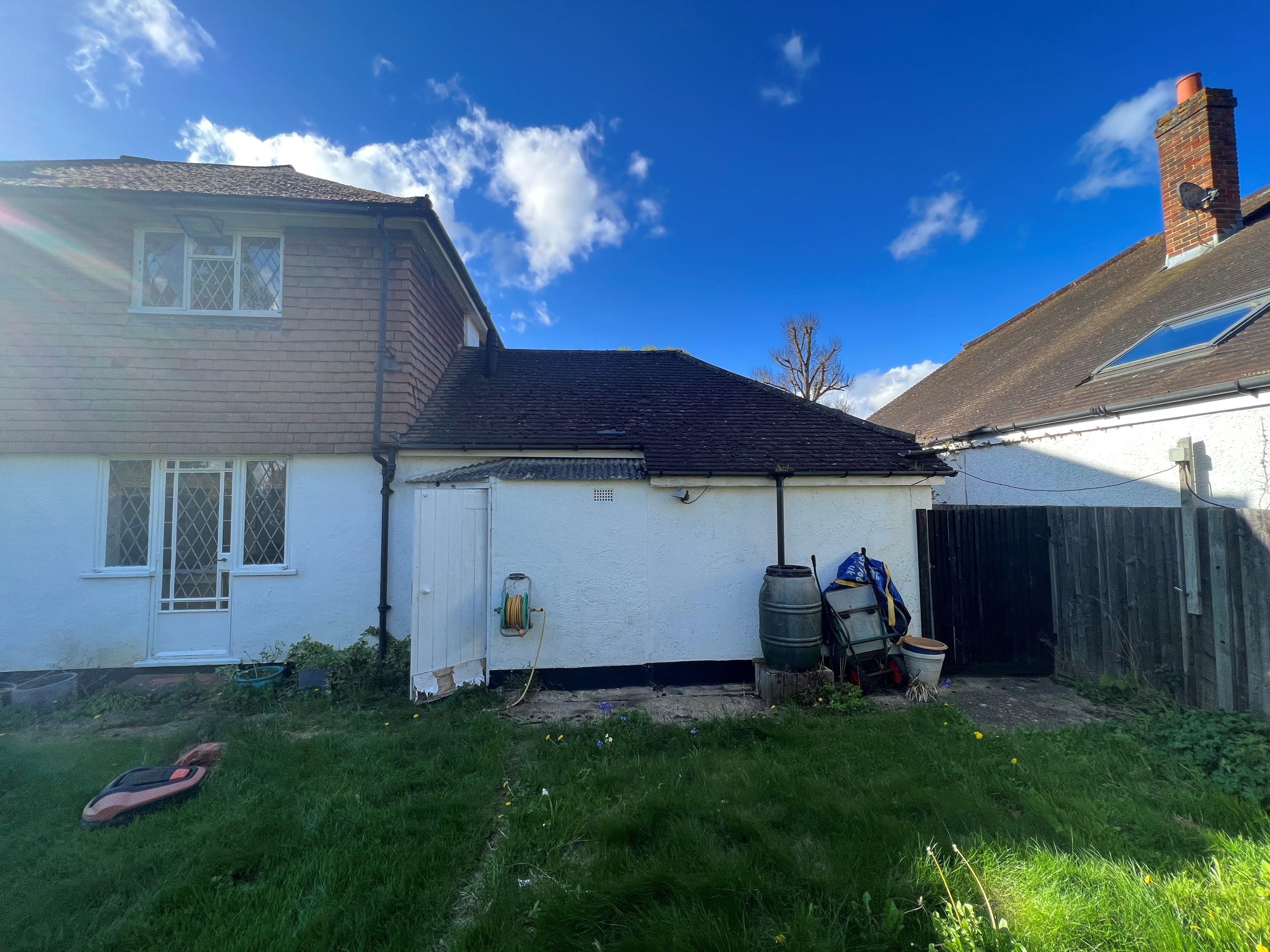
Cobham, Surrey
A redundant double garage and concrete slab were removed to unlock the next phase of a full property renovation.
View Project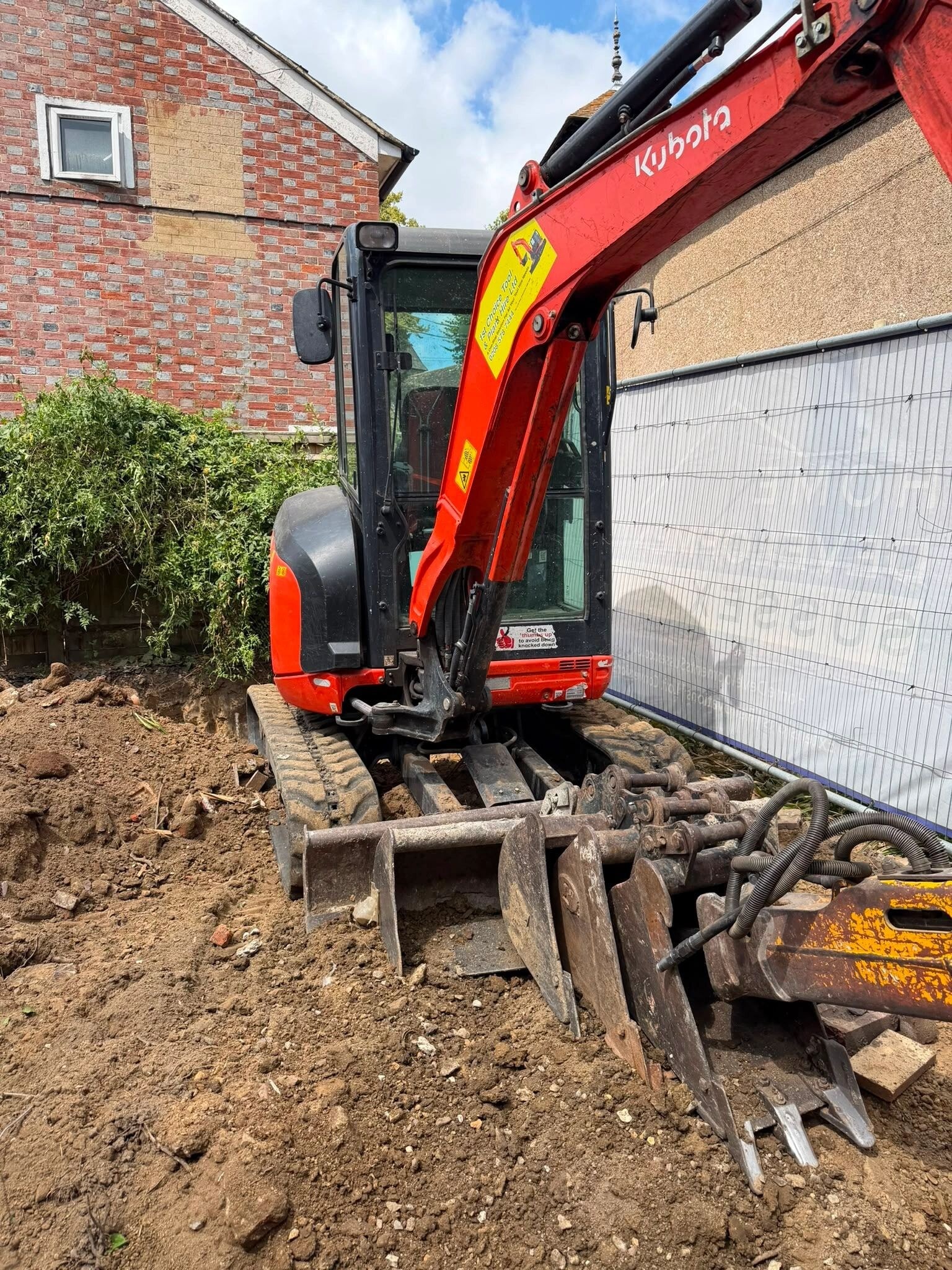
Pulborough, West Sussex
A rear extension was demolished and the site prepared for a new extension on behalf of a builder.
View Project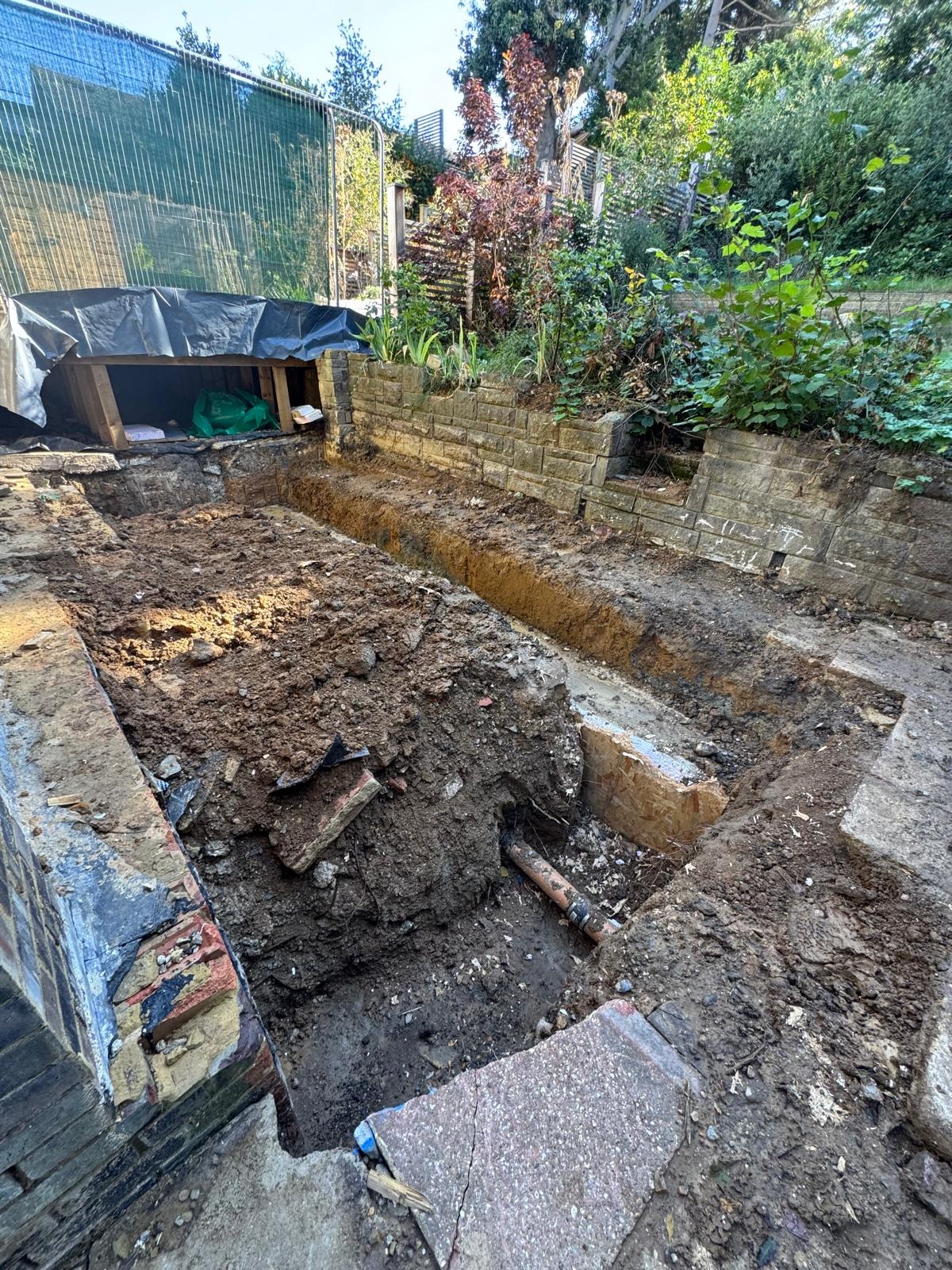
Croydon, South London
A three-storey townhouse was opened up at the rear, structurally altered and prepared for an extension despite sloping-garden access.
View ProjectConfirm the slab, base, pad, path, patio, hardstanding or stated foundation element, plus retained edges and final level.
Check available service and drainage information, plant access, floor-loading constraints, loading and waste routes.
Establish saw cuts where required and select dust, silica, noise, vibration and retained-edge protection for the task.
Use hand-held or mechanical equipment suited to thickness, reinforcement, access and surrounding construction.
Remove concrete and reinforcement, then inspect the stated depth, substrate, edge or formation level.
The handover may be a retained substrate, a saw-cut edge, a slab removed to a stated depth or a formation level for the following contractor. It does not guarantee the condition of concealed substrate, drainage or services, and does not include excavation, remediation or new concrete unless expressly stated.
Pulborough is the principal evidence because its verified record supports concrete breakout during extension demolition. Cobham is included only where its verified garage-demolition record supports slab or hardstanding removal. Ascot is not used because new foundation excavation is not evidence of concrete removal.
The scope can include agreed slabs, bases, pads, paths, patios and hardstanding, with foundations included only where structurally suitable and specified.
Floor and screed removal addresses finishes and screed above a retained structural substrate. Concrete removal breaks out specified concrete elements.
No. They are separate scope decisions and must be identified individually in the quotation.
Yes, where a defined separation from retained concrete is required and included in the scope.
Available information must be reviewed before intrusive breakout. Unexpected concealed conditions may require further instruction.
No guarantee can be made where its condition is concealed. The work is planned around the stated breakout boundary and handover level.
Removal of brick, timber, concrete sectional and other detached garages, with slab removal where agreed.
ExploreClearance of demolition debris, redundant structures and agreed materials for the next stage of work.
ExploreControlled openings and load-bearing wall removal from suitable structural engineer information.
ExploreSuitable material can be retained for reuse as hardcore where this is agreed in advance and fits the project requirements.